Source 4 Wheel Drive Agricultural Tractor for Farming, Lawn, and Garden Use
Explore 30 listings for the 4 wheel drive agricultural tractor, featuring models from 50HP to 200HP with Quanchai or Yuchai engines. Compare specifications including CE certification, Euro II/III emission standards, and 4WD configurations for lawn, garden, and farm applications.
Key considerations
Products List




Comprehensive Sourcing Guide
4 Wheel Drive Agricultural Tractor Sourcing Guide
Sourcing a 4 wheel drive agricultural tractor requires a disciplined approach to verifying technical specifications, compliance documentation, and supplier reliability. The global market for these machines is diverse, with listings ranging from compact models to heavy-duty units designed for large-scale farming operations. Buyers must navigate a landscape where observed price points can vary significantly, often between $3,000 and $30,000 USD, depending on horsepower, engine brand, and included features. Understanding these market signals is the first step in defining a realistic procurement strategy that aligns with your operational budget and performance expectations.
This guide provides evidence-based procurement advice for buyers seeking 4WD agricultural tractors. It focuses on interpreting observed listing data, verifying critical technical attributes, and ensuring compliance with international standards. By adhering to the principles outlined herein, procurement teams can mitigate risks associated with quality inconsistencies, regulatory non-compliance, and hidden commercial costs. The goal is to empower buyers with the knowledge to make informed decisions that ensure long-term operational efficiency and asset value retention.
Product Scope and Observed Listing Signals
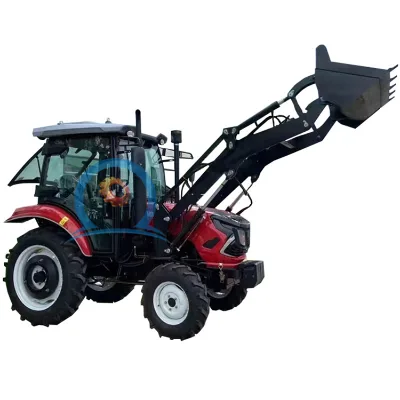
The current market for 4WD agricultural tractors exhibits a wide range of product configurations, from medium-sized units to large, high-horsepower machines. Observed listings indicate that manufacturers offer various models, including the 504, 604, 704, 904, and FL1604, each catering to different scale requirements. For instance, some models are rated at 50 HP, suitable for smaller farms or specialized tasks, while others, such as the FL1604, boast 200 HP engines, indicating their suitability for heavy-duty agricultural applications. Buyers should carefully match the observed model specifications to their specific field requirements, considering factors like field size and the intensity of the tasks to be performed.
Packaging and shipping methods are also critical signals of the supplier’s operational maturity. Listings show that tractors may be packed in wooden boxes, shipped as SKD (Semi-Knocked Down) or CBU (Completely Built Unit), or prepared for standard shipping. The choice of packaging can impact logistics costs, import duties, and the condition of the machine upon arrival. For example, SKD shipments might reduce shipping volume but require local assembly, while CBU units offer immediate usability but may incur higher freight costs. Buyers must evaluate these logistical options in the context of their local infrastructure and assembly capabilities to avoid unexpected delays or additional expenses.
Technical Specifications to Verify
Engine performance and transmission type are fundamental technical attributes that dictate the tractor’s operational efficiency. Suppliers may list engines from brands such as Quanchai or Yuchai, with power outputs ranging from 50 HP to 200 HP. It is essential to verify the engine’s rated power, speed, and cylinder configuration, as these factors directly influence fuel consumption and torque delivery. Additionally, the gearbox type, such as a Shuttle Shift with 12 forward and 12 reverse gears, affects maneuverability and ease of operation in various field conditions. Buyers should confirm these specifications to ensure the tractor meets the power and control requirements of their intended agricultural tasks.
Dimensional and structural specifications, including size, weight, and wheelbase, are crucial for compatibility with existing farm infrastructure. Observed data indicates that tractors can vary from medium to large sizes, with dimensions such as 310015001970MM or 580028003350MM. The wheelbase, for example, may be 2850mm, affecting stability and turning radius. Furthermore, the tire size, such as 16.9-28 for the front and 20.8-38 for the rear, impacts traction and soil compaction. Buyers must verify these physical attributes to ensure the tractor fits within their facility constraints and performs optimally in their specific soil and terrain conditions.
Compliance and Safety Documentation
Certification and emission standards are non-negotiable aspects of tractor procurement, particularly for international trade. Listings may indicate compliance with CE, ISO, CCC, EPA, and EEC standards, as well as Euro II or Euro III emission levels. Buyers must verify that the tractor meets the specific regulatory requirements of their destination country, as non-compliance can lead to customs delays, fines, or operational bans. For instance, if importing to a region with strict emission controls, ensuring the tractor meets Euro III standards is critical. Documentation such as machinery test reports and certification certificates should be requested and validated before finalizing any purchase agreement.
Safety features, including ROPS (Roll-Over Protective Structure) and cabin options, are vital for operator protection. Listings may mention ROPS and cabin compliance with EC and OECD standards, with air conditioning available as an optional feature. Buyers should confirm the presence and certification of these safety features to ensure operator safety and regulatory compliance. Additionally, the availability of a warranty, such as a 1-year coverage, provides a layer of financial protection against early-life failures. Understanding the scope of the warranty and the supplier’s support infrastructure is essential for managing long-term maintenance risks and ensuring continuous operational availability.
Cost Drivers and Commercial Terms
The total cost of ownership for a 4WD agricultural tractor is influenced by multiple factors beyond the initial purchase price. Engine brand, horsepower, and additional features like air conditioning or advanced hydraulic systems can significantly impact the cost. Observed price ranges from $3,000 to $30,000 USD reflect these variations, with higher-horsepower and feature-rich models commanding premium prices. Buyers should conduct a detailed cost-benefit analysis, considering not only the upfront cost but also the long-term operational expenses, such as fuel consumption, maintenance, and spare parts availability. This holistic view helps in selecting a tractor that offers the best value over its service life, which is typically estimated at 6-10 years.
Commercial terms, including MOQ (Minimum Order Quantity) and payment conditions, play a crucial role in the procurement process. Observed listings often show an MOQ of 1, indicating flexibility for individual buyers, but this can vary by supplier. Buyers should negotiate clear terms regarding payment schedules, delivery timelines, and after-sales support. Additionally, the supplier’s willingness to provide customization services can be a significant advantage, allowing for tailored solutions that meet specific operational needs. Understanding these commercial dynamics helps in structuring a procurement deal that minimizes financial risk and ensures a smooth transaction process.
Supplier Qualification and Quality Control
Evaluating supplier qualifications is essential to ensure the reliability and quality of the 4WD agricultural tractor. Buyers should verify the supplier’s manufacturing capabilities, quality control processes, and track record in the industry. The presence of core components like the engine and the provision of machinery test reports are positive indicators of a supplier’s commitment to quality. Additionally, suppliers with certifications such as ISO/TSISO and CCC demonstrate adherence to international quality and safety standards. Buyers should request detailed information about the supplier’s production facilities, quality assurance protocols, and customer references to assess their overall reliability.
Quality control measures, including pre-shipment inspections and testing, are critical for mitigating the risk of receiving defective or non-compliant equipment. Buyers should insist on comprehensive testing of the tractor’s engine, transmission, hydraulic systems, and safety features before shipment. The availability of a machinery test report and the supplier’s willingness to facilitate third-party inspections can provide additional assurance of product quality. Furthermore, understanding the supplier’s warranty policy and after-sales support structure is vital for addressing any potential issues that may arise post-purchase. A robust quality control process ensures that the tractor meets the specified performance and safety standards, reducing the likelihood of operational disruptions.
Long-Term Procurement Checks
Long-term procurement success depends on establishing a sustainable relationship with the supplier and ensuring ongoing support for the 4WD agricultural tractor. Buyers should consider the availability of spare parts, technical support, and maintenance services in their region. A supplier with a strong global network and local service partners can significantly reduce downtime and maintenance costs. Additionally, the supplier’s ability to provide customization services and adapt to changing operational needs is a valuable asset. Buyers should evaluate the supplier’s commitment to continuous improvement and innovation to ensure that the tractor remains relevant and efficient over its service life.
Regular performance monitoring and feedback loops are essential for optimizing the tractor’s operation and identifying potential issues early. Buyers should implement a system for tracking the tractor’s performance metrics, such as fuel efficiency, maintenance frequency, and repair costs. This data can be used to negotiate better service terms with the supplier and to make informed decisions about future procurement. Furthermore, staying updated on industry trends and technological advancements can help buyers identify opportunities for upgrading or replacing their fleet. By maintaining a proactive approach to long-term procurement, buyers can maximize the value and longevity of their 4WD agricultural tractor investment.
FAQs
What certifications are available for these tractors?
CE certification is standard for these units. Additional certifications such as ISO, CCC, EPA, and EEC are also available depending on the specific model and target market requirements. Buyers should verify the exact certification list for their intended region before ordering to ensure compliance with local regulations.
Can I customize the tractor specifications?
Yes, customization is available for these agricultural tractors. Buyers can request specific configurations to meet unique operational needs. This flexibility allows for tailored solutions regarding attachments, engine types, or cabin features, ensuring the machinery aligns precisely with the buyer's farming or industrial application requirements.
What is the typical service life of these tractors?
The typical service life is between 6 and 10 years. This duration depends on usage intensity and maintenance practices. Regular servicing of core components like the engine and gearbox helps maximize longevity. Buyers should plan for routine maintenance to sustain performance over this expected operational lifespan.
Which engine brands are used in these models?
Quanchai and Yuchai engines are commonly used in these tractors. Specific models may feature a 200HP Yuchai engine with six cylinders. Other variants might use different engine types. Buyers should check the specific model number to confirm the engine brand and power rating for their purchase.
What is the minimum operating weight for large models?
Large models have a minimum operating weight of 7700kg. This weight contributes to stability and traction during heavy-duty tasks. Smaller models may weigh less, such as 1800kg for certain units. Buyers should select the appropriate weight class based on their soil conditions and lifting requirements.
How is the tractor packed for shipping?
Tractors are packed in wooden boxes or shipped as SKD and CBU units. Specific dimensions vary by model, with some measuring 3970mm by 1620mm by 2577mm. Proper packaging ensures protection during transit. Buyers should confirm the packing method with the supplier to optimize logistics and handling.